

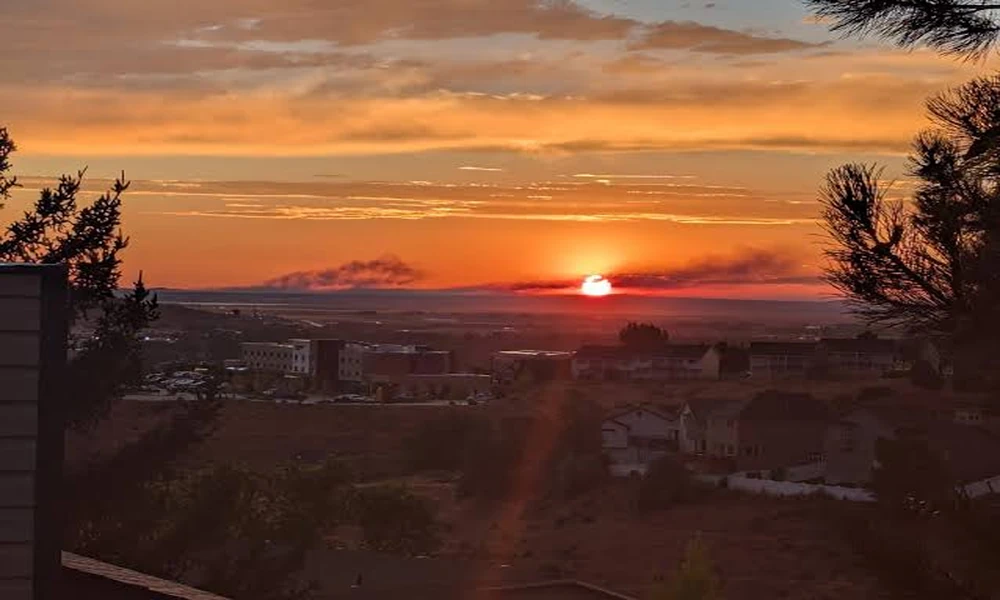
By late summer, wildfire smoke can become a familiar part of life in Pocatello. During July 2026, local coverage reported smoke from fires in Idaho, Oregon, Washington, and Canada cutting Magic Valley visibility from a typical 20 to 30 miles to about 10 to 12. When that haze arrives and a closed-up house still smells of smoke, the odor can point to an air-leakage problem. In Pocatello, that smell can prompt a closer look at the windows and the seals around them. Homeowners looking into the source of the problem can find local window repair and replacement information at nuvuglass.com.
Smoke Makes Air Leakage Noticeable
The same air leaks that bring smoke indoors can also let heated or cooled air escape. During a smoke event, researchers measure how closely indoor fine-particle levels track outdoor levels using an infiltration factor. A review of indoor and outdoor measurements found a median infiltration factor of about 0.45, with wildfire-specific studies producing a median closer to 0.58. The factor accounts for how much outdoor particulate penetrates the building and how much is removed indoors through processes such as filtration and particle deposition.
How much gets in depends on the building. The same review found that a tighter building envelope provided 68% protection from smoke infiltration in one comparison, versus 31% for a leakier envelope. It also found that homes built after 1975 let in less smoke than older ones, showing lower infiltration factors.
Where Smoke Gets Through a Window
Smoke season can reveal problems with the first type, while the second usually shows up through fogging or condensation.
- The perimeter seal is the air seal between the window and the wall, along with the weatherstripping where the sash meets the frame. When it fails, outside air and the smoke it carries can pass around the window. This is one path through which smoke can enter a closed house.
- The insulated-glass seal is the edge seal that holds a sealed double-pane unit together. When it fails, moisture can enter the space between the panes, causing fogging or condensation, while insulating gas can escape and reduce the unit’s thermal performance.
A smoky week reveals the first kind, while a fogged pane is a separate sign that a window is aging.
How Window Leaks Affect Pocatello Winters
A window that lets smoke in during August lets heated air out in January. Closing windows during a smoke event can reduce indoor particle levels. One analysis found indoor concentrations about 32% lower than outdoor levels when windows were closed. A leaky or poorly sealed window limits how much that closed window can do, and the same leakage path raises the heating bill across Pocatello’s long winter and lets dust and pollen in during spring.
What to Check When Smoke Gets Inside
Smoke season can point you toward a window problem, but it cannot identify the cause by itself. A few signs can help identify where smoke is getting through a window.
- Whether air can be felt at the edges of the sash or where the frame meets the wall.
- Whether the weatherstripping is flattened, cracked, or missing.
- Whether a double-pane unit shows fogging or condensation between the panes.
- Whether the caulk and seal around the exterior frame are intact.
Some problems can be handled with repairs, such as replacing worn weatherstripping or resealing a frame. Others, like a fogged sealed unit or a window that no longer closes tightly, point toward replacement. A smoke smell that appears indoors during wildfire season gives Pocatello homeowners a reason to inspect the window and its surrounding seals while the source is still easier to identify.