

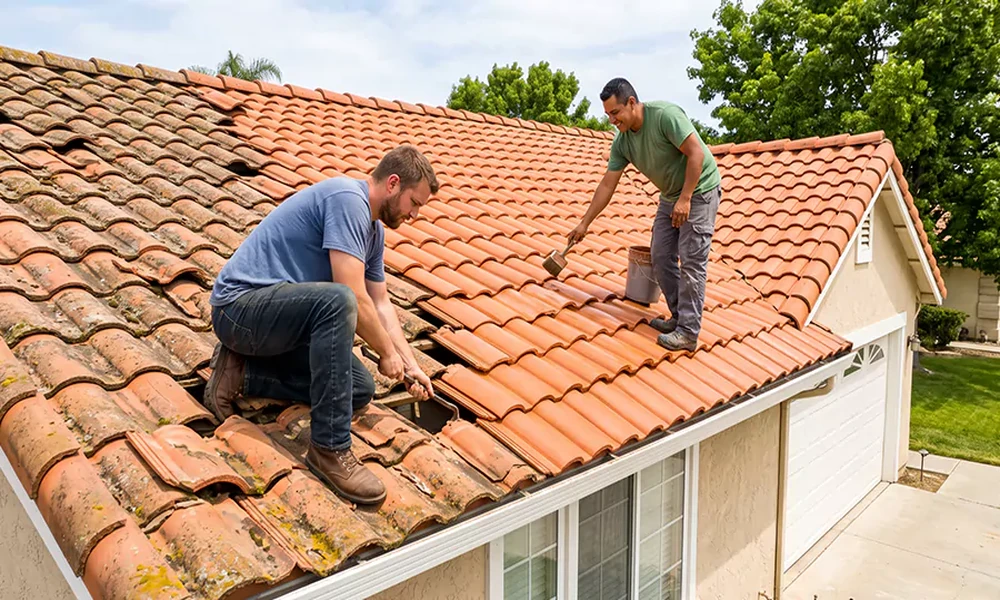
Much of San Tan Valley was built in a rush. Subdivisions spread across former farmland through the mid-2000s, and thousands of homes went up with nearly identical concrete tile roofs installed on tight production schedules. Those roofs are now reaching the age where problems stop being occasional and start being structural, and the tile on top often looks fine while it happens.
That gap between appearance and condition confuses a lot of homeowners. A concrete tile can last for decades, so a roof that looks intact from the street gets written off as healthy. The real story sits underneath and around the tile, and the reasons a roof needs replacing usually come from several sources at once rather than one dramatic failure.
Sorting out which of those sources applies to a specific house is where an experienced local roofer earns its keep. Baker Roofing is owner-led, with Matt Baker on the jobs and crews known for cleaning up daily and leaving yards clear of debris, and the company works with tile, shingle and metal systems on both homes and commercial buildings. For homeowners weighing Roof Replacement in San Tan Valley, the process starts with a free inspection, followed by an estimate that compares options, then the installation and a final walkthrough, with help on insurance documentation when a claim is involved. Booking that inspection before monsoon damage or a ceiling stain forces the timeline gives you far more room to choose between a reset and a full tear-off.
The Underlayment Under the Tile
On a tile roof, the tile is mostly a sun shield and a first line of defense. The actual waterproofing is the underlayment, the layer of felt or synthetic membrane fastened to the roof deck. Many production homes from that era used standard felt, and desert heat dries felt out over roughly two decades. It becomes brittle, cracks at fold lines and tears around nail holes.
Once that layer fails, any water that slips past the tile has a direct path to the deck. Leaks often appear first near valleys, at the low edge of the roof and around penetrations where water concentrates. Because the damage happens out of sight, the first sign is frequently a stain on a ceiling or a soft spot in the decking found during a repair.
Shortcuts From the Original Install
Fast production building left marks. Common findings on homes from that period include flashing that was bent into place rather than properly integrated, minimal sealant around pipe boots, missing or loose bird stops at the eaves and too few battens or fasteners holding tile in high-wind zones. None of these cause immediate trouble, which is exactly why they went unnoticed.
Over twenty summers, those weak details become the spots where water enters, pests nest and tiles shift. When several appear across a roof, patching each one rarely makes financial sense compared with replacing the underlayment and correcting the details all at once.
Sun and Heat on the Lower-Slope Sections
Many homes in the area mix tile on the main roof with shingle or flat sections over patios, additions and garages. Those areas age much faster. Asphalt shingles lose the oils that keep them flexible, shed granules and curl at the edges. Flat sections with coatings or membranes lose protective layers and start to crack or blister.
These sections often reach the end of their life before the main roof, and they tend to fail where they meet the tile, along transitions and flashing joints. A replacement plan that ignores them usually means a second roofing project a few years later.
Monsoon Wind and Debris
Summer monsoon storms bring sudden gusts, blowing dust and heavy rain in short bursts. Wind can lift and crack tiles, especially where fasteners have loosened or the original install skimped on securing perimeter rows. Dust and blown debris collect in valleys and behind chimneys, forming dams that push water sideways under the tile.
After a strong storm season, a roof with tired underlayment may go from one minor leak to several. Storm damage is also when insurance can come into play, so documenting broken tiles and interior damage promptly matters.
Foot Traffic From Other Trades
Rooftop solar has spread quickly across the East Valley, and every installation means people walking on tile. Concrete tile cracks under the wrong step, and the cracks are often hairline and easy to miss. HVAC service, satellite dish mounting and holiday light installs add more traffic over the years.
Each cracked tile lets more water reach the underlayment. Solar adds another factor to the timing decision, since removing and reinstalling panels later costs money. Many homeowners choose to address an aging roof before adding solar or when panels are due for service anyway.
Heat Trapped in the Attic
Poor ventilation speeds up every other problem. When an attic lacks enough intake at the eaves or exhaust near the ridge, heat builds beneath the deck and bakes the underlayment from below. Decking can also absorb moisture during monsoon season and dry poorly, which weakens it over time.
Replacement is the natural moment to correct ventilation, because the roof is open and new vents can be placed properly. It also tends to lower attic temperatures, which helps the air conditioner during long summers.
Repairs That Have Piled Up
The last source is cumulative. A roof that has had a few tile swaps, a resealed vent and a patched valley may still be manageable. A roof with repairs every monsoon season, mismatched replacement tiles and recurring leaks in the same areas has crossed into territory where repairs cost more over a few years than a planned project.
For tile roofs, that project is often a remove and reset, where crews lift the existing tile, install new underlayment and flashing, replace broken pieces and relay the tile. When too many tiles are damaged or the profile has been discontinued, a full replacement with new tile, metal or shingles becomes the better choice. Homeowners associations in many local subdivisions approve roof colors and materials, so checking those guidelines early keeps the schedule moving.
Reading a roof by cause rather than by age alone leads to clearer decisions. Underlayment wear, installation shortcuts, sun, storms, foot traffic, ventilation and past repairs all leave different evidence, and knowing which ones are present shows whether a roof needs targeted work or a full new start.