

From November to March most Calgary homes are sealed up tight. Windows stay closed, the furnace runs for hours every day, the water heater keeps cycling and the gas fireplace gets more use in the evenings. All of that is normal, although it also means that any fuel-burning appliance with a venting or combustion problem has fewer ways to get its exhaust out of the house. Carbon monoxide has no colour, no smell and no taste, so the only reliable way to know it is present is an alarm. Understanding where it comes from and what to do when an alarm sounds is worth a few minutes before the coldest weeks arrive.
Where Carbon Monoxide Comes From
Carbon monoxide forms when fuel burns without enough oxygen to burn completely. A furnace, boiler, water heater, gas fireplace, gas range or vehicle can all produce it, and a properly installed, well-maintained appliance vents its combustion gases safely outdoors. Problems start when something interferes with that process, such as a blocked vent, a damaged heat exchanger, a burner that is out of adjustment or a chimney that no longer draws properly. Many of these faults develop slowly, which is why they are easy to miss in a house that seems to be heating normally.
Winter Conditions That Raise the Risk
Snow and Frost at the Vents
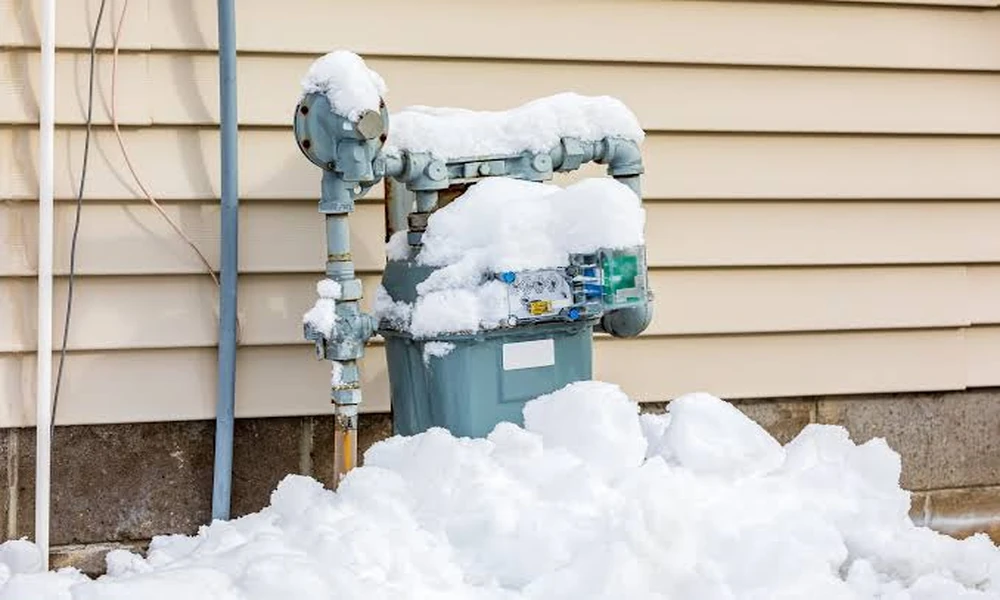
High-efficiency furnaces and many newer water heaters vent through plastic pipes on the side of the house, often only a short distance above the ground. A heavy snowfall, a drift off the roof or a buildup of frost during a long cold spell can partly cover those pipes. Most modern furnaces have a pressure switch that shuts the burners down when the vent is badly restricted, although keeping the terminations clear after every storm is a simple habit that removes the question entirely.
Back-Drafting From Older Appliances
Older mid-efficiency furnaces and conventional water heaters rely on warm exhaust rising up a chimney or metal flue. When a house has been tightened up with new windows and insulation, and the bathroom fans, range hood and dryer are all running at once, the house can pull air back down that flue instead. A technician can test for this by running the exhaust fans and checking the draft at the water heater, which is a sensible check after any major renovation.
The Attached Garage
Warming up a car in an attached garage is a well-known source of carbon monoxide in homes, even with the overhead door open, because exhaust can drift through the connecting door and gaps in the shared wall. The safer habit is to back the vehicle out onto the driveway before letting it idle. Generators, barbecues, propane heaters meant for outdoor use and gas ovens should never be used to heat the house or an attached garage, however cold the night is.
What an Annual Furnace Inspection Looks At
A furnace that has been looked after is far less likely to produce carbon monoxide, and booking an annual furnace safety inspection in the fall gives a technician the chance to catch the slow problems before they matter. A thorough visit includes a look at the heat exchanger for cracks or heavy corrosion, a check that the venting is sealed, sloped and properly supported, and a look at the burner flame, which should be steady and mostly blue. Many technicians also measure the combustion gases with an analyzer, which shows whether the furnace is burning cleanly and gives a number that can be compared year to year.
If something does turn up, such as a cracked heat exchanger or a vent pipe that has come apart in the ceiling, the furnace may be shut off until it is fixed. That is inconvenient in January, although it is the right call. The same goes for the days after a CO alarm, because even once the fire department has cleared the house, the source still has to be found. In either case, leave the suspect appliance off until a heating technician who can test the venting and heat exchanger has tracked down the problem and repaired it. Ask the technician to show you what they found, and if replacement is being suggested, it is reasonable to ask how the fault was confirmed.
Carbon Monoxide Alarms
Every home with a fuel-burning appliance or an attached garage should have carbon monoxide alarms. Alberta’s building code has required them near the bedrooms in new homes with fuel-burning appliances since 2007, although older houses were never required to add them, so plenty of Calgary homes still have none. The Calgary Fire Department recommends at least one alarm on every level of the house, including the basement where the furnace sits, with the most important one in or near the bedrooms, and the manufacturer’s instructions cover the exact mounting height. Plug-in units with a battery backup keep working during a power outage, and combination smoke and CO alarms are fine as long as each one is placed where both functions make sense.
Test alarms monthly with the button, and check the date printed on the back. CO sensors wear out, and most alarms are designed to be replaced after five to ten years, depending on the model. Many will chirp or show an end-of-life message when the sensor expires, which is easy to mistake for a low battery, so if a new battery does not stop the chirping, replace the alarm.
If an Alarm Sounds
Treat a CO alarm as real, even if nobody feels unwell. Get everyone, including pets, outside into fresh air, and call 911 from outside the house. Do not go back inside to open windows or switch the furnace off, since that delays help and the fire department will check the air with its own meter, and stay out until the firefighters say it is safe to return.
Early symptoms of carbon monoxide exposure are easy to mistake for the flu, including headache, dizziness, nausea and tiredness, while higher levels can cause confusion and loss of consciousness. A pattern of feeling better after leaving the house is a strong clue, and anyone with symptoms should tell the 911 operator and the paramedics so they can be assessed. If several people in the house feel unwell at the same time, or symptoms ease once you are outdoors, leave and call 911 even if no alarm has sounded, since an alarm can fail or sit too far from the source. If you smell gas at any point, leave the house without touching switches or appliances and call 911 or ATCO’s emergency line once you are outside.
Calgary Air Heating and Cooling Ltd Contact Information
Address
Phone
+1 (403) 720-0003
Hours of operation
7 a.m. to 11 p.m. (including weekends)
https://calgaryair.ca/furnace-maintenance-calgary/
Map
A Short Checklist for the Season
Before the deep cold arrives, test every CO alarm and check its replacement date, clear snow from the furnace and water heater vents after each storm, and keep the car out of the garage while it warms up. It is also worth making sure everyone in the house, including older children, knows the difference between the smoke alarm and the CO alarm sound and where to meet outside. Booking the furnace service in the fall rather than waiting for a problem covers the rest, and it means the house can stay closed up for the winter with fewer questions about what is happening in the basement.