

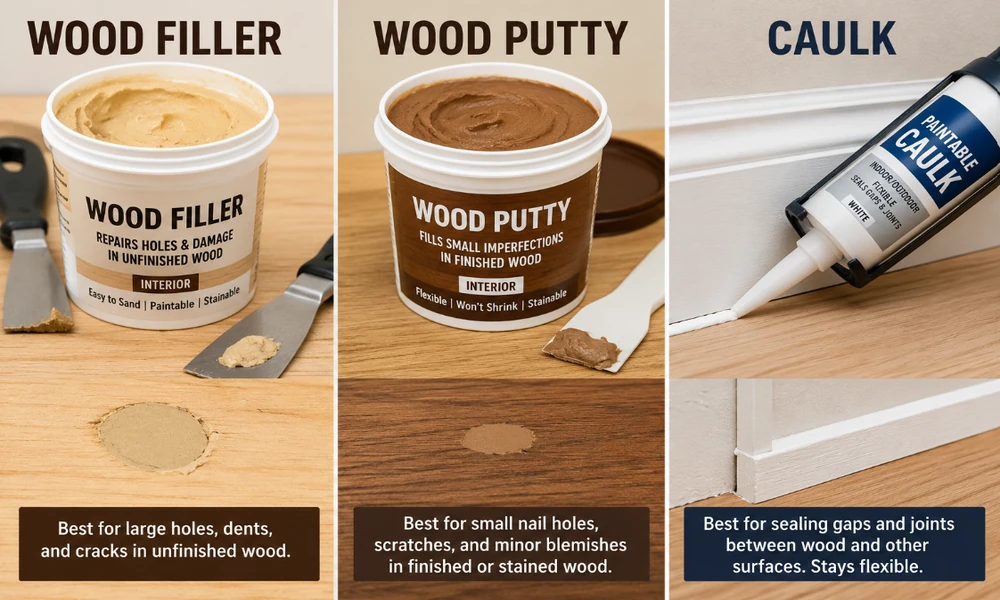
Wood filler, wood putty, and caulk can all be used to fix small gaps or damaged areas. They may look similar when sitting on a shelf, but they are not the same.
Each product has a different purpose.
Using the wrong one can lead to cracking, poor adhesion, or a repair that looks uneven. The right choice depends on the type of damage, whether the wood is finished, and whether the area moves over time.
What Is Wood Filler?
Wood filler is used to repair holes, cracks, dents, and damaged areas in unfinished wood.
It usually dries hard. Once dry, it can be sanded smooth and painted. Some types can also be stained, although the color may not match the surrounding wood perfectly.
Wood filler works well for:
- Nail holes
- Small dents
- Cracks in boards
- Damaged furniture
- Gaps in unfinished wood
- Minor surface repairs
Because it hardens, wood filler is best for areas that do not move much.
For example, it can be used to repair a small hole in a wooden shelf before sanding and painting. It may also work on trim or cabinets that are still being built or refinished.
Wood filler should usually be applied before the final finish.
What Is Wood Putty?
Wood putty is softer and more flexible than wood filler.
It is usually used on finished or stained wood. Many wood putties stay slightly soft instead of drying completely hard.
This flexibility allows the putty to move with the wood as temperatures and humidity change.
Wood putty works well for:
- Small nail holes in finished trim
- Tiny scratches in stained furniture
- Small surface marks
- Minor gaps in finished wood
- Touch-up repairs
Wood putty often comes in colors that match common wood stains. This makes it useful when you do not want to sand, paint, or refinish the entire area.
Still, wood putty is not designed for large holes or major damage. It is mainly for small cosmetic repairs.
What Is Caulk?
Caulk is used to seal joints, seams, and gaps between different materials.
Unlike wood filler, caulk stays flexible after it dries. That matters because many joints move slightly over time.
Caulk is commonly used around:
- Baseboards
- Crown molding
- Window trim
- Door frames
- Cabinets
- Walls and ceilings
- Sinks and countertops
For example, a small gap between a wooden baseboard and a painted wall is usually better filled with caulk than wood filler.
The wall and trim may move slightly as the building settles. Flexible caulk can handle that movement better.
Some caulk can be painted. Other types, such as silicone, may resist paint. Always check the label before applying it.
Which Product Should You Use?
The easiest way to choose is to think about the location of the repair.
Use wood filler when:
- The wood is unfinished
- The repair needs sanding
- The area will be painted
- The damaged spot needs a hard repair
Use wood putty when:
- The wood is already stained or finished
- The damage is small
- You want a quick cosmetic repair
- You need a color that matches the wood
Use caulk when:
- The gap is between two surfaces
- The joint may move
- The repair needs to stay flexible
- You are sealing around trim, walls, or cabinets
Can Wood Filler Replace Caulk?
Wood filler should not normally replace caulk in moving joints.
A hard filler may crack when the wall, trim, or cabinet shifts. Caulk is better for seams because it can stretch slightly.
In the same way, caulk should not be used to repair a large dent in a wooden door. It may stay soft and look uneven after painting.
Each product works best when used for the job it was designed to handle.
Surface Preparation Matters
No matter which product you choose, the area should be clean.
Remove dust, loose paint, old caulk, and damaged wood before starting. Follow the drying time listed on the package.
Wood filler may need sanding after it dries. Wood putty may only need to be pressed into place and wiped clean. Caulk usually needs to be smoothed before it begins to set.
Choose the Right Repair Material
Wood filler, putty, and caulk may seem similar, but they solve different problems.
Wood filler creates a hard repair in unfinished wood. Wood putty handles small cosmetic marks in finished wood. Caulk seals flexible gaps between surfaces.
Knowing the difference can make the repair look cleaner and help it last longer.
This post was written by a professional at Anawalt Lumber. Anawalt Lumber is a family-owned lumber yard Los Angeles and hardware store serving Los Angeles for over a century. Known for quality lumber, contractor supplies, hardware, and a full-service nursery, Anawalt provides personalized service for homeowners and licensed contractors. From job pricing and bulk discounts to special-order materials with fast delivery, Anawalt is your trusted local building supply partner in Malibu, West LA, and Hollywood.